Tag Archives: easy french graded readers

Save the Date: Free Beginner French Comic Book

On Thursday, Gnomeville Episode 1 will be available for free for 5 days.

What is Gnomeville Episode 1? It is arguably the easiest first read for people with an English-speaking background wanting to learn French. It achieves this by using a comic book format, exploiting the thousands of words that are the same in French and English (cognates), and introducing one new word per page. By starting with the most frequently occurring words, you will quickly know a larger proportion of the words in any French text than if the words you learn are of some random frequency. For example, in English, the word “the” makes up about 7% of any English text. This skewed distribution is similar in every language.
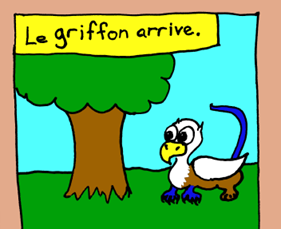
That’s all very well, but for it to be useful for learning, what you read has to be interesting. The main comic story is an all-ages fantasy story about a mage, a couple of gnomes, a human and a griffon going on a quest to capture a rogue dragon. The style is a cross between smurfs, Astérix, and Uncle Scrooge comics, with a slight artistic influence from Mr Men. The first episode relies a little on sight gags until more text is possible. I have seen people chuckle as they read the comic.

In addition to the main story that introduces the vocabulary, there is:

  • A revision story that ensures that you see the vocabulary enough times for it to become more familiar.
  • A crossword for extra reading and active use of the vocabulary.
  • A song
  • An extra easy story about a taxi driver.

Episode 1 has over 300 words of reading in a 28-page comic book, introducing 12 frequent words and many French-English cognates.

As you progress through the series, your receptive vocabulary gets larger, the stories get more complex, and the text length per comic increases (Episode 2: 700 words; Episode 3: 1200 words; Episode 4: 1800 words). The recommended reading rate for complete beginners is one comic per day for the first three episodes and optionally two days for Episode 4. Then, if you are still interested in reading to improve your French, try some of the books on this Amazon store specialising in beginner reading books for French learners or books from Wayside Publishing or TPRS, and build from there.

Meanwhile, you can try Episode 1 for free from Thursday to Monday. Save the date!

Episode 4: Easy Authentic Sentences from French Classics

On this page are short extracts, titles and sentences which occur in classic French texts and only use the vocabulary of Episode 4 of my Gnomeville comic book series, that is, 39 frequently occurring words in French newspapers plus exact cognates and names. (I may update this list periodically, when I find more things with my scripts.)

Un signal !
Un danger pour nous !

Cinq semaines en ballon by Jule Verne.

Ah!
C’est vous, Tréville !

Oh !
C’est vous, c’est vous !

Les trois mousquétaires by Alexandre Dumas.

Il descend !

Elle est en prison ?

Mais qui ?

Elle est dans la prison de Mantes.

Mais silence, silence !

Qui, elle ?

Une lettre !

Ah mais !

Elle !

Impossible de continuer le commerce.

Mais ce secret ?

Signez, Milord !

Plus horrible !

Mais c’est horrible !

Qui est-elle ? et qu’est-elle ?

Mais, c’est impossible !

Ce n’est pas ELLE !

Ah ça !
Ah ça !

C’est vous, madame Poisson ?

Ça c’est grave !

C’est une supposition.

C’est un secret.

C’est ça !

Oh ! c’est elle ! c’est elle !

Le Canada est content de vous !

C’est nous !
Nous, Blanche et Rose !

C’est elle , n’est-ce pas ?
C’est elle.

Qu’est-ce que c est que ça ?

C’est ça , Lieutenant.

Est-ce vous , Adolphe ?

Et ça , qu’est-ce que c’est ?

Mais c’est abominable !

C’est pour ça.

C’est pour vous.

Avec elle , c’est impossible !
Ah !

Ah !
Et une lettre de madame Bonaparte.

C’est terrible, ça !

Oh !
Impossible de refuser.

Zdenko a de la consolation, consolation, consolation !

Entre !

Je n’entre pas.

Un ordre de Madame.
Un ordre de Madame ?

C’est un monstre !

C’est une lettre !

Mais c’est une fortune !

C’est ça qui est une transition !
Ah !

Oh ! qu’est-ce qu’il a ?

Ah ! c’est vous, baron !

(Hamlet entre.)

C’est possible ! mais … ce n’est pas certain.

C’est grave, ça !

Il est avec nous.

Mais la Bastille ! la Bastille !

Ça n’est pas possible !

Est-elle noble !

La phrase est-elle simple ?

Mais il est innocent !

Continuez, madame.

Un aide de camp entre.

Mais qui est-ce ? … Qui est-ce ?

Mais c’est Julien !

Qu’est-ce qui arrive ?

Elle est en France !

C’est d’elle !

Mais c’est un commencement , c’est un signe.

Mais, madame, c’est impossible.

Elle est l’unique force.