Tag Archives: education

Different Ways of Beginning with Graded Reading

There isn’t really just one way of starting out with reading in a language that you want to learn. Through my observations and reflections, I have found the following different approaches for absolute beginners and near beginners.

  • All new words are illustrated. This can be a book that is like an illustrated dictionary, such as some board books I have read. Alternatively, it can be like Le Français par la méthode nature, where new words are slowly added and the text slowly becomes more complicated.
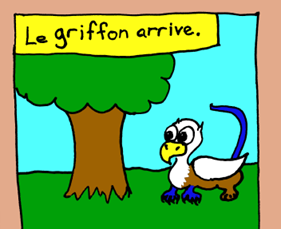
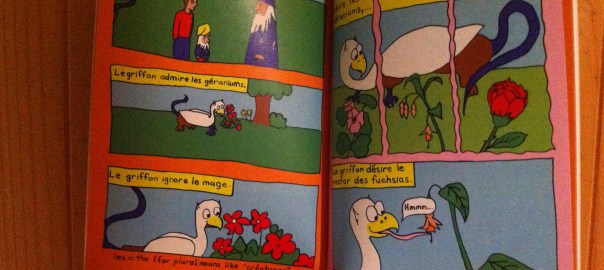
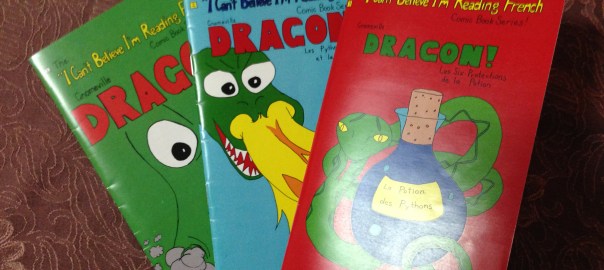
  • Assume exact cognates (words with similar appearance and meaning) to give a starting pool of vocabulary, then introduce new words gradually. This is the approach in Gnomeville. Unlike the previous option, this one requires an assumption about the first language of the learner. But the benefit is a greater starting vocabulary, allowing for more interesting content. It only works well with related language pairs, like French and English.
  • Small vocabulary stories with much repetition. This is the TPRS/Wayside publishing approach, and it’s valuable for absorbing language thanks to the repetition. These also tend to use cognates, which mean there is an assumption about the first language of the learner.
  • Parallel texts. Some people are really keen on these. It can be like your own personal Rosetta Stone (the stone, not the app), which can be fun – especially where there is a different writing system. I think these are most useful where the text in the language being learnt isn’t too hard, so that the translation is just used to check things occasionally.
  • Reading a story you know well in your first language. This is a bit like using parallel texts. I think it is too difficult for starting out but some people like to intensively read (that is, slowly, with translation and lookups of unfamiliar words) a favourite book rather than fluently read something easier. The argument against the approach is that very little text is read per minute, reducing the opportunity to be exposed to more text.
  • Bootstrapping a text. This is an idea that I have explored a few times. The idea is to filter a book’s sentences based on difficulty, starting with the easiest sentences and gradually adding more complex sentences and vocabulary. Finally, you read the full book. My earlier experiments with this idea were not successful. My current version is “Bootstrapping the Three Musketeers“, which starts with mostly one-word sentences consisting of names, interjections and a few cognates, and slowly builds vocabulary. As more is added, the book snippets get a bit longer, being either multiple sentences or longer sentences. The bootstrap book is organised like a form of spaced repetition, where new words occur several times in the chapters. So far, the extracts are not long enough to allow people to deduce the meaning of words through context, so there are short (5-8 word) glossaries at the start of each chapter.
  • Another approach that has been used on occasion is to start a story in the person’s main language and slowly add more of the target language words, resulting in a mixture of both languages. I have seen this done to teach Chinese characters in a story written in English. I’ve also read a paper on the approach being applied to English-German. In a way it is not too different to the Gnomeville method of adding a new word periodically, in a cognate-rich text, except in Gnomeville you are reading the target language immediately. For more distant languages, such as Chinese and English, the approach is necessarily different.
  • Related to the previous idea, it might be possible to have text that is in the learner’s main language but structured according to the target language. This might only work where there is enough similarity or simplicity in the target language. For example, you could have sentences like “I it to him have given”, to provide the flow of the language but with fully understandable vocabulary. Then, as for the other graded readers that incrementally increase their difficulty, words could be switched from main language to target language.

Is there a best approach? The research emphasises that time spent reading and interest in what you are reading are the most important factors. As for level of difficulty, the optimal is considered to be 95-98% knowledge of the vocabulary in the text. But there is quite a spread for this across individuals. The main factor seems to be whether you are comfortable with the amount you don’t know, and are happy inferring meaning despite not knowing the definition of some words. It is a skill worth developing. I think we have it as children and lose it at some point, and then need to regain the skill for language learning. Certainly my recollection in childhood was of happily reading comics in Dutch without knowing the meaning of every word. Then a couple of decades later, being frustrated that there were so many words I didn’t know in Dutch children’s books. I’m now back to reading books without stressing about unknown words in Dutch, French and German. For other languages, I still need beginner material.

Gnomeville Comics are Easier than I Thought

On reviewing my readability measure results for various items in my collection, I suddenly thought, “hang on, how can the expected vocabulary size for Gnomeville Episode 1 be 25 when only 12 very frequent words are introduced?” Clearly something had gone wrong somewhere.

I blame the fact that part of my analysis is manual, and I probably didn’t follow the procedure very well. I run various scripts to produce a ranked list of words in the text in the frequency order of a large corpus of written French (mostly from Project Gutenberg). The manual bit is counting up cognates, or at least starting at the least frequent word end and counting up until I find 5% of the words that are not cognates or names. I think I went astray previously by having a less reliable process.

Results can differ depending on decisions that are made, such as whether to include titles (which I treat as sentences), the “Présentation” section that has brief notes about each character, and what is counted as a cognate. It is reasonably clear-cut for Gnomeville, but for other texts, it is less clear. Should “habiter” be considered a cognate due to its similarity to “inhabit”? And there are other words that are cognates in the linguistic sense but not particularly obvious from a learner perspective. The choice of general frequency list will also make a difference. Spoken text has different characteristics to written text, especially in French. Also, the very frequent words used for Episode 1 and 2 are the 20 most frequent in French newspapers, which is not the same set of words as any other corpus of text. The text I use for calculating expected vocabulary size has some of those words at lower ranks (“se” at 25, “au” at 31, and “on” at 40), which explains why there was the potential for the expected vocabulary size to be larger than the number of words introduced. But unless those words made up about 5% of the extract it was unlikely they would receive those scores.

Anyway, on revisiting my incorrect assessments of the Gnomeville episodes, I have the following updated vocabulary sizes.

EpisodeOld Expected Vocab SizeNew Expected Vocab SizeNew Readability Score
12532.20
216143.23
340173.83
4153.66

You may notice that Episode 4 has a lower expected vocabulary size at 95% and a lower readability score than Episode 3. There’s not a lot in it, but Episode 3 had longer sentences in the extract.

Well, there you are. Gnomeville’s expected vocabulary size is much smaller than originally calculated – at least for Episodes 1 and 3.

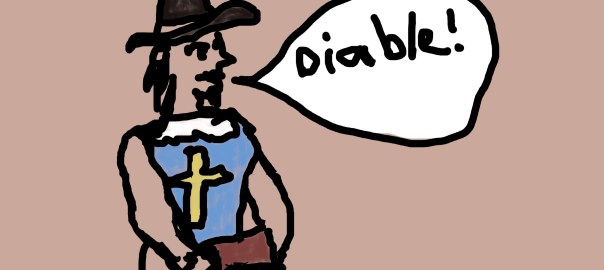
Book cover with musketeer holding a boot, saying "Diable !"

A Tale of Three Three Musketeers and Another One or Two

No, that is not a typo in my title. Thanks to my recent obsession with this novel, leading to the Bootstrapping the Three Musketeers book, with a second on the way, I thought I’d look at three different abridged versions of Les Trois Mousquetaires. I have one published by CLE International, who, in the copy I have, state that it is for a vocabulary of 700 words, at the top level of the Niveau 1. New editions call that CEFR level A1. I also borrowed the CIDEB version, which is aimed at B1, with no mention of vocabulary size, as is common in current publications. When looking online at Mousquetaires books, I found another one adapted by Frédéric de Lavenne de Choulot (FLC).

One thing I’ve noticed with these, as with the recent movies, is that writers select different scenes to include in their version. CLE and FLC both include d’Artagnan’s anger at being ridiculed for riding an old nag. Both the recent movies and CIDEB chose to exclude that scene. The movies also took many more liberties with the story.

OK, now to details…

The CLE version

The CLE version, which aims for a vocabulary of 700 words, has a text length of about 10,000 words of story. It is written in present tense, and the volume includes a brief biography of Dumas, vocabulary support, and some short questions at the end of the book, with solutions. The books of this series provide two types of vocabulary support: general vocabulary is defined in French in a footnote, whereas words that are specific to the story, such as épée, are listed at the back. There are several ink illustrations throughout the 64-page book. (I notice the new edition has new greyscale images.)

On my simple readability score, based on a sample of the first 115 words, it gets 13.15, due to long sentences in the introduction. The expected vocabulary size for 95% coverage is estimated to be 7,427 (based on types, not word families).

The CIDEB version

CIDEB always include lots of additional material, such as many exercises, images, and additional articles to read that are related to the story. The book is 128 pages long, with less than half of that being for the story. I estimate it to have about 13,000 words of story. In addition there is an imaginary interview with Dumas, historical information about the period, and information about movies made of the story. The vocabulary support is provided as footnotes in French.

The story itself is written in passé simple. Based on a sample of 125 words at the start of the story, it gets a score of 8.71, also having a vocabulary size score of 7,427 and an average sentence length of 12.1.

The FLC version

The caveat for this review is that I have only looked at the sample. Therefore I do not know what additional material may be found in the book. There appears to be some vocabulary support, though I cannot say what form it takes, since I have only looked at the sample, which doesn’t allow the links to be followed. I am uncertain why certain words were selected for vocabulary support. Given the target audience appearing to be English-speakers, I would think it pointless to define “armes” and “crient”, but perhaps some nuance was discussed about these words. I noted one minor typo, a missing circumflex on the “i” of “boîte”. That’s not a big issue, given that I’ve seen many errors in books published by major publishing houses (and have been guilty of a couple in my published papers and comics).

The text is in present tense and received 8.18 on my readability measure, with a lower sentence length in the sample of 113 words analysed. The expected vocabulary size at 95% is 5,010.

Summary and Another Mousquetaire

Based on my simple measure, the FLC book comes out in front as the easiest, but there’s not much in it. I might add that the original only scored 12.3 in a short sample from the introduction, due to many low frequency cognates giving it an expected vocabulary size of only 5,543. All three books are simpler than the original in some way, and based on my reading, they are all engaging. All are a similar length in terms of story at 10-16 thousand words. The readability score of the original does highlight a potential problem that happens in graded readers that are not catering for a specific language pair. A different, higher general frequency word may replace a low frequency French-English cognate, making the resulting text harder, not easier for someone with an English-speaking background (although it can help an English-speaker get more experience of those higher frequency words). I have noticed in the past that some vocabulary support is more difficult than the word being defined, due to its similarity to an English word.

Both the CLE and FLC are very much reading-focused, whereas CIDEB tends to turn each story into a bunch of lessons, which, while often interesting and useful, get in the way of reading the story. Depending on my mood, I’ll either skip all the extra material and read the story, potentially going back to read the extra things later, or I’ll look through the extra material as I go. The one activity that I do find useful and make use of in CIDEB books is the pre-chapter vocabulary activities. My favourites are the mix and match vocabulary to images. This is great for people with different vocabulary backgrounds, as there will be some words you know, and others that you can puzzle through, based on the images and the other words to be matched. The activities help increase familiarity with the words, which appear in the chapter to follow.

I have another musketeer story in my collection, not written by Dumas. It is L’autre mousquetaire by Rupert Besley, illustrated by Bob Moulder. This is from the Mary Glasgow Bibliobus set of books, which are no longer in print. It is a short comic about Pathos, a musketeer wannabe. I’ve noticed several phrases in it that come up frequently in the original book, as determined by my bootstrapping algorithm: parbleu! bah! diable ! morbleu ! pardieu ! These words don’t come up so much in the adapted versions, since they are not “useful” language and are mostly dated, but they are an essential part of the character of the original novel. Something to look forward to if you decide to tackle it.

Beginner French Resources

tldr: Easy French sentences from classics here.

Years ago I was tinkering with creating my beginner comic book in French, and then researching what made things easy to read in French for those with English speaking background. I learnt that the two main aspects that characterise text difficulty are grammar and vocabulary, with other aspects usually having a much smaller role to play. Through my own research, inspired by my own frustration and anecdotal experience, I learnt that for French the typical readability measures that use word length or even how common a word is for vocabulary difficulty just don’t work for people with English speaking backgrounds. This is because so many of the longer “difficult” words in French are identical to those in English, or close enough not to matter. My experiment demonstrated that you may as well just use sentence length to decide on difficulty, being the simplest measure of grammatical complexity. Despite this, vocabulary matters. It’s just that the words that are difficult are differently distributed than for languages that don’t have this peculiar French-English relationship.

In another of my experiments, I tried to filter a large collection of French text to find extracts that are easy for English speakers. While the extracts that are very easy are not long, they do exist. It’s a matter of playing around with the constraints to get something sizeable. It should also be noted that the text I used consists of French classics, which can be challenging to read. Anyway, it’s been a while since I looked at this. The other day I created a page on this site that contains all the sentences and extracts I found that restrict themselves to the vocabulary and grammar of Episode 1 of my comic book, (le, la, les, de, du, des, et, est, se, que, and present tense third person singular of -er verbs) plus cognates and names. I hope it is useful. More to come.