Monthly Archives: October 2026

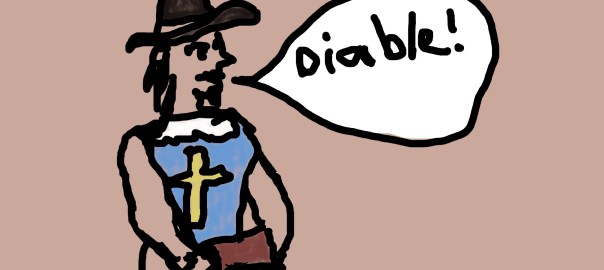
Book cover with musketeer holding a boot, saying "Diable !"

My Language Books at Kobo

I’ve been slowly making my books available at Kobo in addition to Amazon, as part of my plan to publish more widely.

It’s tricky showing all my books at Kobo in one search, since their language differs. Here is a link that shows all my books in all languages on Kobo: my short book on writing stories for language learners, and my Bootstrapping the Three Musketeers book.

The content of the Writing Stories for Language Learners book is pretty clear from the title. The bootstrap book is less clear, so I’ll just briefly recap below.

In Bootstrapping the Three Musketeers: Filtering French for Familiarity, I show the easiest sentences in Alexandre Dumas’s classic novel in sequence (with some duplicates removed), with each chapter adding about 6 words that can help complete the most sentences, until, by the last chapter, 100 words of vocabulary have been added, a few verb conjugations that occur frequently, and about 50 English-French cognates. The final chapter gives practice at using context to guess the meaning of some words. The sentences in the book provide sufficient repetition by following spaced repetition principles, to increase the chance of them being learnt.

Book cover with musketeer holding a boot, saying "Diable !"

So, if you have a preference for Kobo over Amazon, these are now available. Next step, which is more difficult, is publishing the Gnomeville comics for beginners in the French language on Kobo.
How to Write Stories for Language Learners

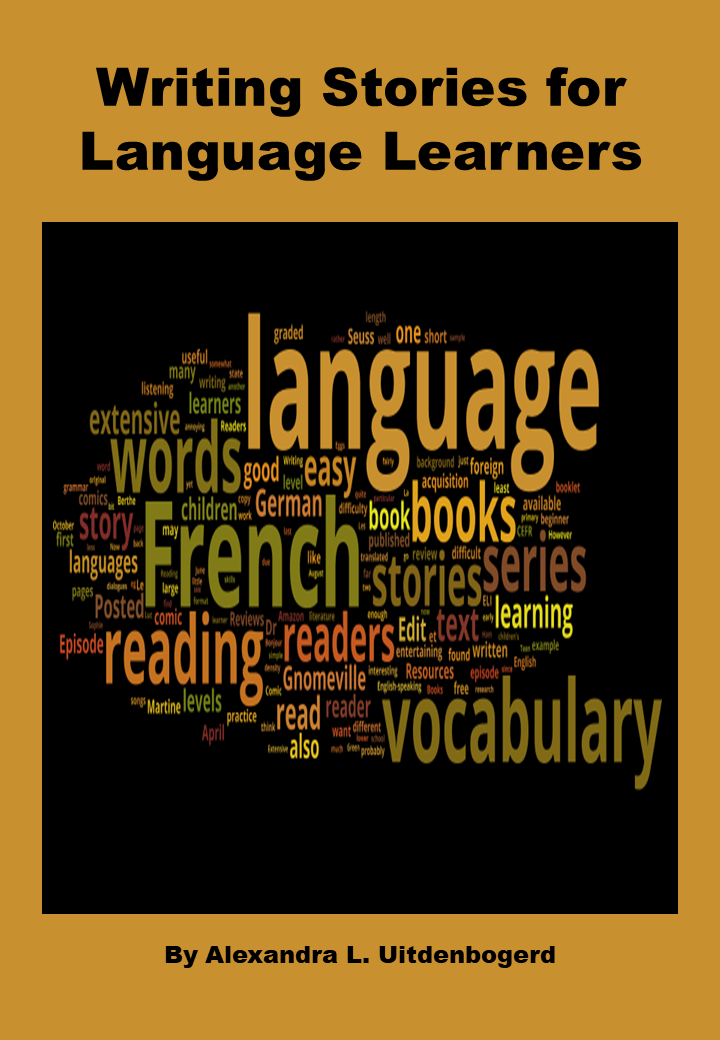
I have studied the topic of readability (measuring how difficult a given text is, linguistically speaking) and extensive reading (acquiring language by reading fluently at your level) for many years, in addition to reading and writing graded readers for language learners. Now I have put the essentials that I have learnt on the topic into an ebook, so that other writers can benefit by producing graded readers that are more beneficial for language learners. The two essential essentials are:

  • Make the stories compelling reads, but
  • Constrain your vocabulary (and grammar) based on frequency and general utility.

Learn more from the book.

Find it on Kobo and Amazon.

A word cloud based on the blog. The most prominent words are: language, French, and Vocabulary.

On Re-Reading Graded Readers

After having read a few novels in French, I have been concurrently re-reading my collection of graded readers. Here are my observations.

  • Even though my vocabulary is much greater now, and the A1-A2 graded readers feel relatively easy, there are still many gaps in my vocabulary that haven’t been filled. I have learnt that Hachette allow their authors to choose 20% of the vocabulary to suit their story, which may be a reason that there are always many unfamiliar words and expressions. I’m sure other publishers of graded readers have similar rules. (In contrast to that, the rules for the Gnomeville comics are that only the already introduced and defined words are used, plus French-English cognates.)
  • As with my previous reading, there are many graded readers that are sufficiently entertaining, but a few stick in my memory. The CLE International adaptation to a vocabulary of 500 words of En Famille by Hector Malot is one that engaged me the most so far. While tastes vary, if you enjoy historical stories about orphans, I thoroughly recommend this one.

One conclusion that I draw from this is that waiting until you know all the vocabulary that occurs in a particular level of graded reader is pointless. You will end up not getting enough practice at more complex grammar. Your interest in the story and whether you know enough to follow the story without being frustrated are your best guides as to whether something is worth reading.