Category Archives: My Comic Books

These posts report on the progress of my comic books, or feature information about them.

It’s not too late for your free beginner French comic from Amazon

Episode 2 of the Gnomeville beginner French comic book series is still available for free on Amazon until Friday. Episode 1 is still discounted on Amazon.com and Amazon.co.uk in a countdown deal that increases every couple of days. I hope you enjoy it!

Freebie French Beginner Comic ebook Soon

Just a heads up. On Monday 17th March, Episode 2 of the Gnomeville beginner French comic book series will be available for free on Amazon for five days. Episode 1 will also be available at the minimum 0.99 price on Amazon.com and Amazon.co.uk in a countdown deal that increases every couple of days. Mark the date in your calendar!

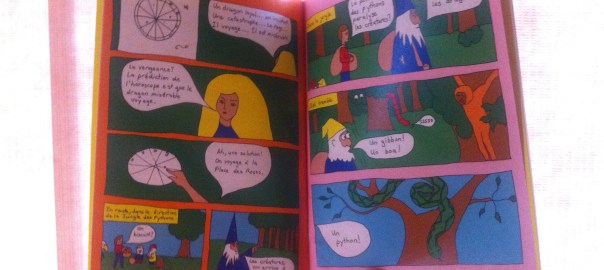
Excerpt from Episode 2 of Gnomeville: Dragon! – a series of comic books written in French for beginners with an English speaking background. Episode 2 only assumes that you know the following words that are covered in Episode 1: le, la, les, et, est, de, du, des, un, une, que, se. The story so far is summarised on the first page of Episode 2.

French Comics for Beginners

Most pages I’ve seen that try to answer the question “What are the best French comics for beginners?” only include comics written for native speakers. That is fine, and it is easier to follow a francophone comic than a novel, thanks to the pictures. However, if Astérix is still beyond you, there are easier alternatives to start with.

Based on the principles of extensive reading, you want comics where you know the meaning of 95-98% of the words you read, to read fluently, enjoy what you’re reading, and gain language capability from exposure to lots of text. Of course, you also need to enjoy what you’re reading to benefit from it, so if something doesn’t appeal to you, it would be better to find something else to read.

Materials written for native speakers of French will have much richer vocabularies and grammatical constructions than those written for learners. If you want to start on something written for you the learner, rather than a francophone, here are a few options to look at.

  1. Gnomeville episodes 1-3. These assume no knowledge of French and tell an entertaining tale about gnomes, a griffon and a mage going on a quest to capture a dragon. The focus is on introducing the most frequent words in French while using cognates (words that are the same in both languages, in this case, English and French) and pictures to make the story entertaining. Suits ages 8 and above. Available from Amazon as ebook or on Square as a physical comic book.
  2. Various offerings from My Generation of Polyglots. I’ve only looked at the sample of the graphic novel, which is of Chapter 7. It is more like a picture book in format than comic book/bande dessinée. The language is very simple and every word has a translation at the bottom of the page. There is only a small amount of text on each page, so it has a high picture to text ratio, making it a comfortable beginner book, despite it being a 110-page text. If the sample chapter is anything to go by, each chapter is a complete story. There are other comic books available at the website too. The language level seems to be tied to school levels 1 and 2. The stories appear to suit young adolescents. Definitely worth a look for beginners who want to read in French.
  3. languagecomics.com have a series of comics published on-line that are written for learners. There are a few available for free to try out and the rest can be accessed via a subscription. Episodes are a page or two long, with links for difficult words, as well as other resources. These also appear to be targeted at adolescent learners of French. Definitely worth trying if you find comics for native speakers daunting.
  4. Luc et Sophie. These are beginner comics, suited to 7-11 year olds who are learning French. I found them a bit annoying, but if you like young sibling rivalry antics, they may suit you. Vocabulary is found at the back of each short comic. If you feel daunted by long texts and want to feel a sense of achievement at finishing something, these very short comics will be an ideal start.
  5. Mary Glasgow’s Bibliobus books and others. Unfortunately these are out of print, but if you can get them (I scored a few second hand, and also borrowed some via inter-library loan), they are reasonably easy to read. Some are quite entertaining, while others are a little contrived or annoying. The contrivedness disappears as you go up the levels, as the authors have more freedom to express themselves. My favourites are Le chapeau rouge and Le gangster et le chat. Note that Bibliobus is also the name of a series of French books for French children, so make sure you are getting what you expect.
  6. The Lire Davantage series published by Heinemann has a comic book format for many of the books. As with the Glasgow ones, some are entertaining, while others are a bit dull or contrived. Yet others are informative non-fiction. I believe these are also out of print, but seem to be available secondhand. Probably suits ages 10+.
  7. There are a few textbooks that include a comic book format story in each lesson. Ça Bouge by Michael Sedunary is one of these, aimed at young adolescents and is fairly entertaining.
  8. ELI publish a magazine for learners of various ages/levels. Each issue of series Voilà (young children), C’est facile (A1-A2), Môme (A2-B1), and Jeunes (B1-B2), contain comics. If the format hasn’t changed since I last grabbed copies, it is two pages of comic in a 16-page magazine. The rest is filled with activities, quizzes, and articles.
  9. Aquila Communications have comics/bandes dessinnées for beginners to intermediate. Normally they only sell to schools but they might agree to sell to an individual if you contact them directly. Either way, you can read some pages from some books on the website for practice and to get an idea of what they’re like. I don’t have their comics but have enjoyed some of their books for low-intermediate to intermediate in the past.

It’s all down to how comfortable you feel with the language you don’t know. If you are confident, then dive straight into the classics: Lucky Luke, Tintin and Astérix. Then venture beyond those based on your tastes or language goals. But if they are still at your frustration level, start with those that are written for beginners and work your way up.

Once you are confident enough to read comics written for native speakers, it is worth having a look at those available to read for free from comicbookplus.com. I haven’t looked at many yet but the Baby Journal might be easier given it is aimed at children. The comics have ratings, which may make choosing easier. Le Fanchon de Soeur Bourgeoys dramatises a bit of history from the early days of Québec.

Note to authors of French comic books for learners: if I haven’t got your offerings on my list, please let me know. I’d be very happy to add them.

(Last updated 26th April, 2024. Now with affiliate links again (2025).)

Function word frustrations

I recently re-watched Dilili in Paris, which is a fabulous animation movie for children, with French dialogue that is slow enough for French language learners to follow. I originally watched the movie during the Melbourne French Film Festival and considered buying the movie later so I could try watching it without English subtitles.

Frustration 1: Memory

There is a frequently repeated phrase when Dilili meets new people: “Je suis heureuse de vous rencontrer”. It was semi-humorous, and certainly designed to be remembered, to teach how to be polite when meeting someone new. However, what I actually remembered after a week or two was: “Je suis heureuse __ vous rencontrer.” Despite being exposed to many occurrences, the function word was lost. Function words don’t provide semantic content and therefore appear to be harder to retain. There is certainly research evidence that concrete nouns are easier to remember than various other types of words. This movie brought that home to me in a big way.

Frustration 2: Resources

(Not really about function words…)

I bought the DVD of the movie, and then when viewing it, discovered that the subtitles could not be switch off, and that the only subtitles were in English. I don’t know who makes these decisions when preparing DVDs for sale, but perhaps they don’t really consider their audience carefully enough. A French movie sold in Australia would have various audience segments: French ex-pats – possibly including some French people who are hard of hearing, Australian francophiles, Australians learning French. To me, movies and TV episodes are highly useful for practising comprehension of the spoken language. Ideally it can be done at three levels of difficulty (with the example given for L2 referring to the language being learnt and L1 referring to the native language):

  1. L2 audio with L1 subtitles,
  2. L2 audio with L2 subtitles,
  3. L2 audio without subtitles

I even do this with DVDs that were originally in English. I’ve watched two entire series of Perry Mason with French audio, which was quite illuminating. If you are short of practice material, check your DVD collection for audio in your target language. You may be pleasantly surprised to find a good selection amongst your favourite shows.

Frustration 3: Vocabulary Size

(Function words are frequent words…)

One of the excellent things about some graded readers was that they were designed for a specific vocabulary size. For me, vocabulary makes all the difference between a readable text and an unreadable one.  CLE International used to publish books targeting a specific vocabulary size. For example, Niveau 1 had vocabularies of 400-700 words. Through extensive reading, I have successfully moved from 300-word vocabulary books to 700-1000 word ones, and I hope to continue to progress through further reading. However, as with other publishers, the publications have now been converted to CEFR levels: A1, A2 etc. and as far as I can tell, the subtleties of vocabulary size have been removed from the book information.

I have completed a CEFR B1 in French, yet I’m most comfortable reading A1 texts (and texts with less than 1000 word vocabularies) and with few exceptions they are not easy apart from the grammar, which is too easy for me, but the books are still sometimes challenging vocabulary-wise. What frustrates me is that A2 covers such a wide range of vocabularies, depending on the source material, from readable to incomprehensible. Published vocabulary sizes for A2, where they occur at all, vary from 400 to >1200 words. The level of frustration with some of these graded readers is the same as for texts written for native speakers. I oscillate between A1, A2, native texts and back again. The original memoirs of Céleste de Chabrillan are as easy and more exciting than many A2 texts.

CEFR is designed, as far as I can tell, to describe a person’s practical skill in a language, and for that it is useful. However, the jumps between levels are quite large, so that the defined levels are not very useful for the learner themselves. Some publishers solve this by dividing up levels. ELI uses A0, A1, A1.1. The Danish Teen Readers/Easy Readers also divide up the levels, and still appear to quote target vocabulary sizes. Indie publishers tend to ignore vocabulary size in their writing. However, writers and publishers should remember that:

  1. Extensive reading is at its best if learners are reading at a comfortable level while not being familiar with all vocabulary. Ideally learners should know 98% of the words in text they are reading.
  2. Readability of text largely consists of grammar and vocabulary components.
  3. The more readable AND interesting reading material is, the more learners will read, the better their vocabularies will become, and the better their skill in a language will be.
  4. Publishing vocabulary levels required for 95-98% coverage of the text will assist learners in finding materials of the right level for them at any point. Vocabulary levels should be (loosely) based on general word frequency.

This is why I write my comic books for language learners. This is why I research extensive reading, readability and language acquisition.
Readability Zones

I’ve just been updating my database of French readers and observing the types of books or stories in the different ranges of my current preferred readability measure.

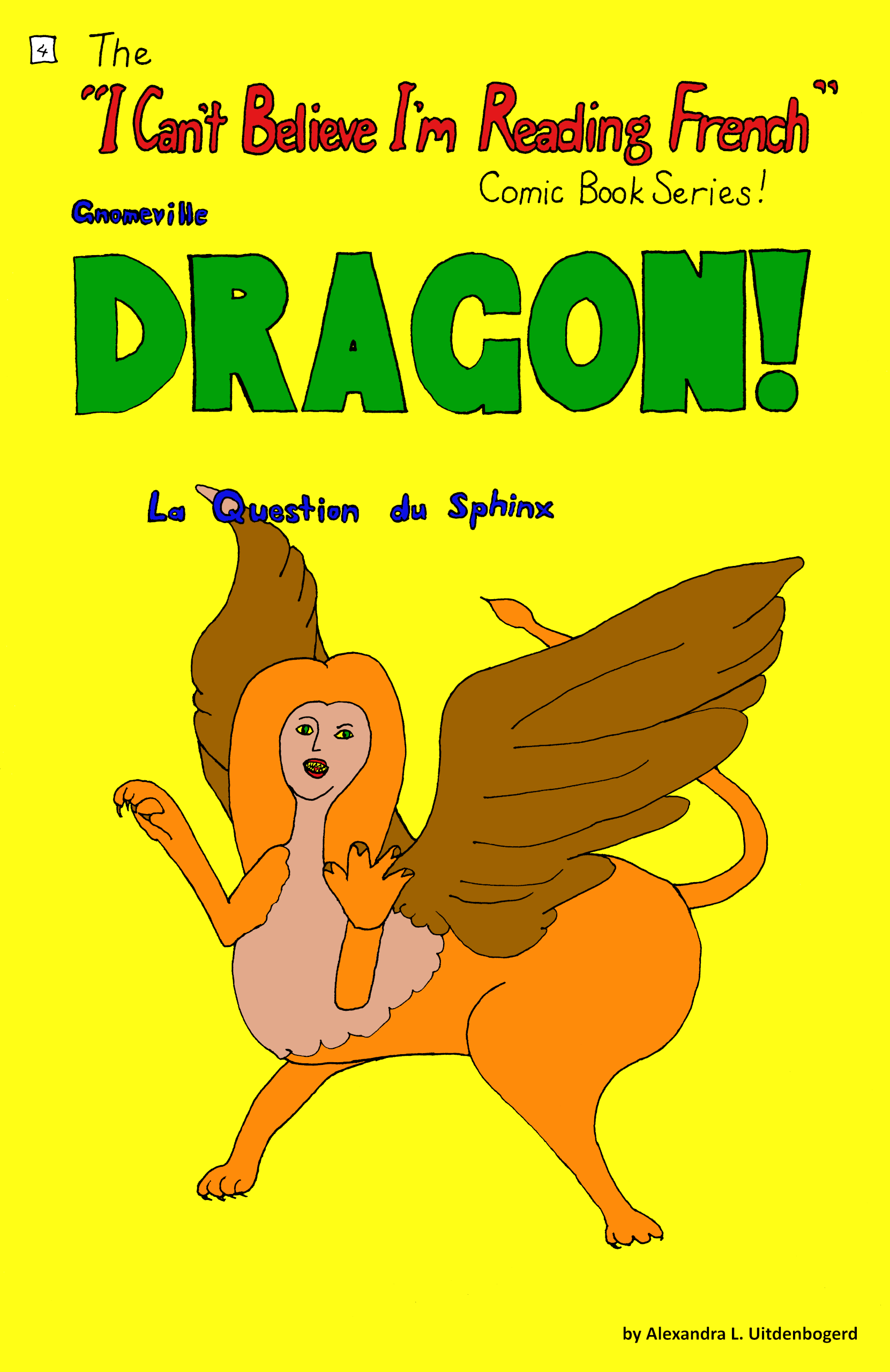
Scores under 4 are ridiculously easy for people with an English speaking background. Currently this consists only of episodes 1 and 2 of my Gnomeville comics. Sentences are short and vocabulary is highly constrained, exploiting French-English cognates.

Scores in the 4-4.99 range are very easy: Bonjour Luc, A First French Reader by Whitmarsh, and Histoires pour les grands. They tend to be conversation-based.

Scores in 5-5.99 tend to be the short illustrated graded readers such as Bibliobus, as well as La Spiga’s Zazar for grands débutants (target vocabulary of 150). Gnomeville Episode 3 sits here due to having longer sentences compared to the first two episodes.

Scores in 6-6.99 tend to have longer sentences, including some classic graded readers such as Si nous lisions and Contes Dramatiques, as well as the 300 word vocabulary Teen Reader Catastrophe au Camping des Roses.

Scores 7-7.99 also have the more text-like graded readers, including Sept-d’un-Coup by Otto Bond, which tends to have long sentences but well-controlled vocabulary.

In the 8-8.99 range I find the first story for native speaking children, as well as more graded readers, including one with a target vocabulary of 1000 words.

The first books for adult native speakers occur with scores between 10 and 12.

Looking at the stories in the list, my own level seems to be from 7 to 10, suggesting I should continue reading more challenging graded readers in addition to stories written for French children. That is pretty much what I have been doing for a while, as well as incidental reading on the web and elsewhere.

A quick look at the relationship between stated vocabulary sizes and the 95 percentile that I have been using indicates that the required vocabulary is  roughly 1.5x  + 2600. However, I am using a token-based vocabulary whereas most would use a word family one. If I assume token vocabulary sizes are 5 times word family sizes, then the equivalence point for this model is when the vocabulary is about 770, meaning that the vocabulary load will be excessive for stated vocabulary sizes less than 770 but be ok for sizes greater than 770. That’s reasonably reassuring. Mind you this is an extremely rough estimate.

This work was based on about 100 words from the start of the text of 40 stories, but it does seem to sort things fairly usefully. The outlier based on my experience of reading the stories is Aventure en Normandie, with a score of 9.49. I don’t recall it being a difficult read.

Meanwhile I am making more progress on Episode 3 of my comic book. I decided to divide one page into three pages, as it had a lot of text and too many new language concepts for a single page. So Episode 3 will probably be 32 pages long, breaking the standard Gnomeville pattern of 28 page episodes. Hopefully it will be ready within a month.

Recent French Reader Reads plus Errata

I succeeded in acquiring more classic French readers recently. One of my new favourites is Dantès from Otto Bond’s Basic French Readings alternate series. It is a simplified extract from Dumas’s Comte de Monte Cristo. The story starts with an assumed knowledge of 97 frequent words, much like Sept-d’un-coup by the same publisher, but succeeds in having a higher proportion of cognates, leading to an impressive expected vocabulary for 95% coverage of 316 (based on my word list).  This makes it the lowest I’ve seen so far, apart from my own series.

However, the important thing is also whether it was an enjoyable read. I definitely got hooked on the story, and then all of a sudden the extract ends, and I’m left wanting to read the rest of the story. That can only be a good thing.

I was less captured by the remaining stories in the five-story volume, but still enjoyed most of them.

Regarding the match between publicised vocabulary sizes of graded readers and the reality of reading them, I can say from my cursory investigations that there is not always a good match between the two. Perhaps it averages out across the books, as I only take the first chunk of text for my comparisons, but if the first few paragraphs are too challenging, then a language learner may lose interest.

I’ve developed a new estimate of readability now, which is more complex than ones I’ve previously used and seems to match the foreign language learner’s experience reasonably well. Based on this, and my more recent acquisitions, I now recommend the following as first reads for French beginners with English-speaking background.

Young children: Luc et Sophie series, or Bonjour Berthe, which I find more entertaining. Le Petit Napoléon series is also quite good, and suitable for all ages, for those who like cats.

Older children: Gnomeville, Le Chapeau Rouge, select stories from Mary Glasgow’s Bibliobus, or Sue Finnie’s Lire Davantage.

Teenagers: I quite like the Teen Readers series. Catastrophe au Camping des Roses is rated as a vocabulary of 300 words, and my estimate has the 95% coverage vocabulary at 2421, which isn’t too bad. But Dantès mentioned above is easier vocabulary-wise.

Adults: Dantès is my current favourite as a first read. Becky Tucker’s Histoires pour les grandes appears to be easy, but I haven’t read enough to know whether it is interesting. I have yet to rate other ebooks.

However, the only stories that you can read immediately in French without having studied it is the Gnomeville series. There are some minor issues with it though, as have been brought to my attention recently. There are places where I have used “de la Fantasia” that should be “de Fantasia”. I was uncertain of the rule for this, but now I have discovered it. Mostly “de” is used with a country, but “de la” is used in expressions that have a temporal sense to them, such as “le gouvernement de la France” (since governments are not permanent), or if there is an adjective applied: l’Histoire de France but l’Histoire économique de la France. Very subtle indeed and I hope I can be forgiven for getting that subtlety wrong in my comic. I intend to make a second edition of Episode 2 at some point to rectify this. Another error in Episode 2 is the use of the verb “voyage” combined with “à” (“voyage à la Place des Roses”). Voyage doesn’t get used this way and “à” should probably be “vers” to communicate this idea. The sentence will be removed from the second edition.

In other news I attended the Applied Linguistics Association of Australia 2018 conference a couple of weeks ago. It was very inspiring, and also emphasised that the important thing with language acquisition is communication, not perfection. Perfection is unlikely to be achieved, but improvement is always possible. So let’s keep improving our language skills. Read, listen, write and speak. With practice comes improvement. Until next time.


A few more French graded reader book stats

Since my last graded reader update I’ve looked at a few more books, some of which are “classics”, in the sense they were from the “direct reading” era of the first half of the twentieth century, following the influence of Michael West’s constrained vocabulary for language teaching, the various word and idiom frequency lists created at the time, and the idea of readability. Some of these books I had already acquired earlier; but through reading some papers published at that time, I was able to compile a shopping list of other books written according to the same philosophy.

As a result, I have a new winner in terms of expected vocabulary size at the 95% threshold of reading comfort. A New French Reader by Ford and Hicks received a 95% vocabulary size of 3532, and Otto Bond’s Sept-d’un-Coup was a close second, with 3650. Bond’s book starts with a much smaller initial assumed vocabulary (97 words) than the Ford and Hicks book (523), so Bond’s book may be a better first read despite the slightly higher vocabulary score here. As seen in my first post on expected vocabulary size for 95% coverage, these are much higher scores than my Gnomeville comics, as my comics take readability criteria to the extreme.

So based on the current stats available on vocabulary, I recommend the following first graded readers for English speakers learning French.

For 6-9 year olds: Bonjour Berthe.

For 10+: Gnomeville

For adults who don’t like fantasy comics: Sept-d’un-Coup by Otto Bond – though I think there are some errors in it, and it’s out of print (and it probably counts as fantasy…).

Stay tuned for further updates.


It’s never as authentic as a native speaker

I have my moments of doubt with my French comic book project. It is virtually impossible to write something that is absolutely correct French in terms of the expressions used if one is not a native speaker. Grammar is relatively easy to get right, apart from minor slip-ups, but having something sound like natural French, especially while intentionally writing in a constrained vocabulary is almost impossible.

I’ve been attempting to get Episode 3 of my comic book ready this month, spurred on by a potential launch date at the language-themed concert I’m involved with, happening tomorrow, as well as #inktober. However, before finalising my comic it was important to get it checked by a native speaker of French. This happened today, and as usual there are errors that need to be fixed, and unlike text that is free to vary without consequences, this means making decisions about whether to leave out phrases or whole sentences, find an alternative French-English cognate, or an alternative way of saying the same thing. As I also try to ensure there are a certain number of repetitions of key words, phrases, or grammatical points, further changes also need to be made. Then there’s the crossword… As a result, I will need to delay the release of Episode 3 for a bit longer.

Unfortunately, despite multiple checks by francophone proofreaders, some things do get missed. I appear to have an error in Episode 2, which has already been published. I may need to set up an errata page here, and perhaps release a second edition at some point. It’s all a little discouraging, but I’m not giving up yet.