

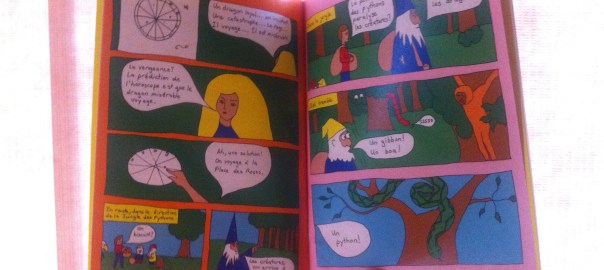
On this page are short extracts, titles and sentences which occur in classic French texts and only use the vocabulary of Episode 3 of my Gnomeville comic book series, that is, 29 frequently occurring words in French text, plus exact cognates and names. (I may update this list periodically, when I find more things with my scripts.)
C’est une promenade !
C’est une occasion.
C’est impossible !
C’est impossible !
Est-il possible, madame !
C’est une tradition.
Avec la Nature ?
Est-ce possible ?
C’est possible.
Pour qui ?
Pour La Rochelle.
Succès certain.
Je signe !
Graves questions !
Je refuse ! je refuse !
C’est terrible, … terrible.
Dorian Gray ? Qui est-ce ?
Est-ce une allusion ?
Des Alpes !
Est-ce le major ?
J’examine l’immense horizon.
C’est long.
C’est excellent !
C’est un crime !
Ah ! c’est horrible ! horrible !
C’est Arthur Labarou.
C’est abominable !
Une affaire de police !
Et qui est-ce ?
C’est probable.
C’est un poète !
Un grand poète ?
Et que désire Porthos ?
C’est le présent.
C’est imprudent.
C’est admirable !
C’est impossible, c’est impossible !
C’est possible, madame.
Paris est tranquille ?
Nobles sentiments !
C’est violent.
C’est innocent.
C’est exorbitant.
Succès certain.
Affaires de police !
C’est juste ! c’est juste !
Ah !
C’est une superstition.
C’est une consolation.
C’est différent.
N’est-ce pas ?
Sire, sa place est vacante.
Ce n’est pas juste.
J’ai de l’imagination.
J’ai du courage.
Je continue.
C’est une affaire !
C’est une grave affaire !
Le reste est horrible !
Son crime !
N’est-ce qu’une intrigue galante ?
Pas possible !
C’est absurde !
Qu’est-ce que c’est ? qu’est-ce que c’est ?
C’est la France !
C’est impossible, Marie !
C’est extravagant.
C’est interminable !
C’est correct.
C’est certain !
C’est fatal !
C’est simple.
C’est original.
C’est brave !
C’est immoral !
C’est inexplicable !
C’est la morale.
C’est la nature !
C’est une injustice !
Est-ce que c’est possible ?
C’est sa nature.
C’est le moment.
C’est le principal.
Est-ce qu’il est content ?
C’est en vain.
C’est la vengeance de l’ art.
N’est-ce pas , Louise ?
Ce n’est pas extravagant !
Ce n’est pas terrible !
Ce n’est pas possible.
À cause de sa fortune ?
C’est inexact.
C’est intolérable !
Ce n’est pas la question.
C’est stupide.
C’est splendide !
Ce n’est pas le moment !
C’est évident.
C’est le lion du désert.
C’est amusant !
C’est détestable !
Oh ! c’est superbe !
C’est stupide , n’est-ce pas ?
C’est une infidèle !
C’est la Révolution.
C’est un américanisme.
C’est du latin.
Est-ce le chagrin ?
Est-ce un crime ?
Avec qui est-il ?
Est-ce une hallucination ?
Est-ce un spectre ?
Ah !
C’est Madame !
N’est-ce pas juste ?
C’est une science.
La science…
Qu’ est -ce que la science ?
C’ est une disgrâce.
Avec qui ?
Est-il optimiste ?
Est-il pessimiste ?
Il est absurde, n’est-ce pas ?
Ce n’est pas probable.
Pour le service ?
Avec les dames.
Ah !
Ah !
C’est l’usage ?
Dans sa prison, Sire.
Et avec qui ?
Oh !
Les troupes arrivent en Canada.
Au combat !
Marche !
Est-ce un air ?
Ah ! Ce n’est pas long !
Pour paris ?
Pour paris.
Est-ce la police ?
C’est la police.
Le document ! c’est le document !
Je brave la damnation.
Au galop !
Au galop !
Est-ce un général ?
Est-ce un prince ?
C’est une miss Blake , de New-York.
Avec le chauffeur !
La harpe !
Est-ce négligence ?
Oh !
Jane, c’est cruel !
Est-ce juste.
Est-ce magnétisme animal ?
Sa religion !
Protestant !
C’est juste.
C’est un brave home, n’est-ce pas ?
Est-ce une menace ?
On ne manoeuvre pas.
Est-ce papa ?
C’est papa ! c’est papa !
C’est une vengeance !
C’est une désertion.
Il n’est pas imbécile.
C’est Antonia et ce n’est pas Antonia !
Oh !
Est-ce un millionnaire ?
Qu’est-ce que l’idéal ?
Est-ce une insurrection ?
C’est une insurrection.
C’est un saint !
C’est terrible.
N’est-ce pas ?
Oh ! ce canon, ce canon !
C’est incontestable.
Ah ! princesse Marie !
Qu’est-ce ?
De qui ?
Impossible ! oh ! c’est impossible !
Avec madame ?
Je n’ai pas de parents.
Pas de parents !
Pour la France ?
C’est sublime !
C’est pure imagination !
C’est son bureau.
C’est un secret.
Ce marquis est un danger.
C’est incompréhensible.
C’est bizarre.
Ah ! que c’est bizarre !
Est-ce grave ?
Est-ce long ?
Oh ! c’est un gas !
Oh ! c’est une terrible alternative !
En route pour la Madame Hütte !
Ah !
Oh ! je tremble !
Avec sa fortune !
J’arrive de New York.
Est-ce exact ?
Est-ce regret ?
C’est grave ?
Est-ce certain ?
Du moment que c’est pour madame !
C’est justice , n’est -ce pas ?
C’est une opinion.
C’est une situation.
C’est un massacre.
C’est son affaire.
C’est la cathédrale.
C’est le théàtre.
Est-ce possible !
Nancy ! capitale de la Lorraine !
De qui est-ce ?
O Zeus ! les horribles convulsions !
Est-ce une vision ?
En route ! en voyage !
J’ai de l’ambition.
Attention ! je commence.
Est-ce qu’il est content ?
Est-ce que ce n’est pas de tradition ?
Qu’est-ce que c’est que des spéculations , papa ?
Qu’est-ce que le courage ?
Qu’est-ce que la patience ?
C’est un satin ?
C’ est un satin !
… Ah !
… Ah !
N’ est-ce pas ?
Il est adorable ! adorable !
Opinion de sir Francis Burdett sur l’union.
Mariage de Bonaparte.
La position de Lyon et son importance.
Oh ! c’est une sainte !
Ah ! ce n’est pas de la diction.
Son courage.
C’est un artiste !
Note sur l’article de M. Clouard.
Est-ce l’original ?
Ce mariage est impossible, madame !
Est-ce distraction ?
C’est regrettable.
C’est urgent.
C’est un voyage !
Ce point est important.
C’est l’impossible !
C’est dans la nature.
C’est colossal !
C’est suspect !
Il est artiste.
C’est une position en France.
C’est impossible, n’est-ce pas ?
C’est un miracle !
C’est le chaos.
C’est la table.
Est-ce un parent ?
C’est le guide !
C’est sa glorification.
C’est un clown !
C’est une religion.
J’arrive de Bretagne.
C’est son secret.
C’est son expression.
C’est un brigand !
C’est une passion.
C’est le prince.
C’est un affront !
C’est un martyr !
C’est le message !
C’est une question.
C’est le Temple.
C’est un original.
C’est un duel !
C’est un vice.
C’est la cause !
Est-ce une illusion ?
Est-ce un temple ?
C’est une abomination.
C’est une rage !
C’est la fortune !
C’est une supposition.
C’est le colonel.
Et c’est justice.
C’est le signal !
C’est un déluge !
C’est la débâcle.
Est-ce une profession ?
C’est la principale.
C’est un aristocrate.
C’est une fatigue qui n’est pas supportable.
Qu’est-ce que c’est que la civilisation ?
N’est-ce pas admirable ?
Est-ce le secret sombre ?
Qui n’est-ce pas ?
Ce n’est que justice.
C’est de la religion.
C’est le moment favorable.
N’est-ce pas abominable ?
C’est de l’injustice !
C’est un prince exorbitant.
Qui est ce saint Abraham ?
Le second, qui est-ce ?
C’est une horrible situation !
Est-ce de la justice ?
Il n’est pas terrible .
Et c’est en vain.
C’est de la farce.
C’est un danger public.
C’est Satan en personne ?
C’est le papyrus antique.
C’est terrible, ce silence !
N’est-ce pas horrible ?
Est-ce que je tremble ?
Ce n’est pas loyal !
C’est d’impatience , Parry.
Soprano, n’est-ce pas ?
C’est une véritable invasion.
C’est une seconde création !
N’est-il pas horrible ?
Qu’est-ce que le miracle ?
C’est de l’extravagance pure.
C’est stupide; c’est immoral.
Il arrive, n’est-ce pas ?
C’est l’unique solution probable.
Ce n’est pas un idiot.
Il n’est pas en danger.
J’adopte le plan d’Athos.


 Gnomeville